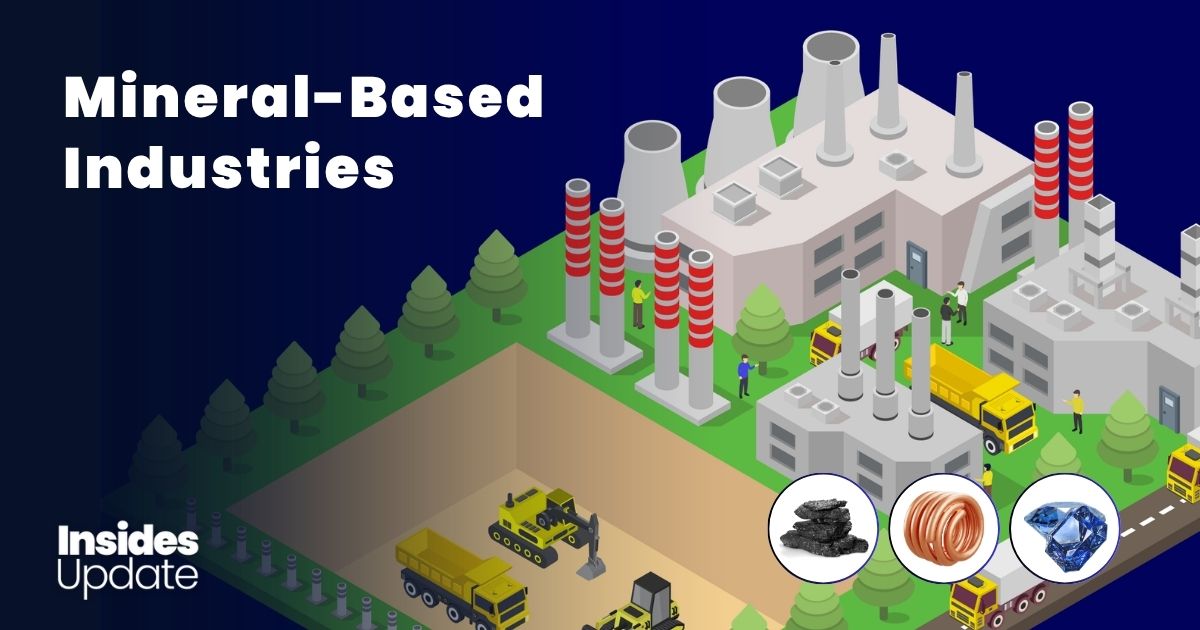
From the smartphone resting in your hand to the concrete walls of the skyscrapers towering above us, modern human existence is entirely dependent on one foundational sector: mineral-based industries. Mineral-based industries build the world, while agro-based industries feed it.
Understanding what these industries are, how they operate, and why they hold absolute economic supremacy is critical not just for geography students or economists but for anyone looking to understand the mechanics of global development.
Key Takeaways:
- Definition: Industries relying on crude mining ores (metals and non-metals) as primary raw materials.
- Significance: They supply the capital goods (steel, cement) required to build all other infrastructure.
- Major Types: Ferrous (Iron/Steel), Non-Ferrous (Aluminium/Copper), Non-Metallic (Cement/Glass), and Chemicals.
- Location Strategy: They are almost exclusively built near mining belts or power grids to reduce massive logistical costs.
What are mineral-based industries?
In the simplest terms, mineral-based industries are manufacturing or industrial sectors that use mineral ores and non-metallic minerals as their primary raw materials to manufacture finished or semi-finished goods.
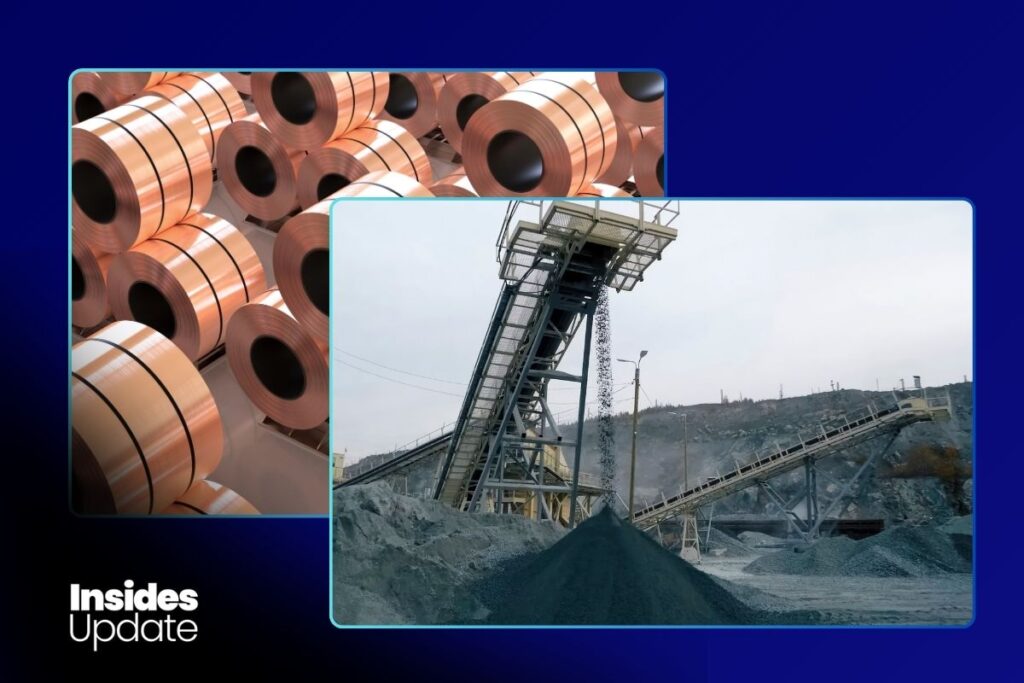
Unlike agro-based industries (like cotton or sugar), which depend on plants and agriculture, mineral-based industries rely on Earth’s non-renewable treasures extracted through intensive mining operations. These industries process heavy, raw earthy materials into usable commodities—turning crude iron ore into high-grade steel, or raw limestone into industrial cement.
Difference Between Agro-Based and Mineral-Based Industries
- Source of Raw Material: Agro-based industries rely on agriculture (plants, animals), whereas mineral-based industries extract non-renewable ores deep from the earth.
- Nature of Output: Agribusinesses mostly produce consumer goods (food, textiles). Mineral industries produce capital goods (steel sheets, construction materials) that are used by other industries.
- Capital Required: Mineral-based industries are extremely heavily capital-intensive. Building a steel plant costs billions, whereas a small textile mill can be set up at a fraction of that cost.
Types of Mineral-Based Industries (Classification)
Depending on the type of minerals they process, these industries are broadly classified into four major segments:
1. Ferrous Metallic Industries
“Ferrous” means containing iron. These industries process iron ore and are considered the backbone of any nation’s industrial strength. They include the manufacturing of pig iron, steel, and ferrous alloys (like manganese and chromium). Without ferrous industries, manufacturing heavy machinery or bridging rivers would be impossible.
2. Non-Ferrous Metallic Industries
These industries process metals that do not contain iron. The most prominent examples are the aluminum smelting, copper, lead, and zinc industries. Non-ferrous metals are vital for aviation (due to their light weight) and electronics (due to high conductivity).
3. Non-Metallic Mineral Industries
Not all minerals are metals. Industries in this category use non-metallic minerals extracted from the earth. The biggest giant in this space is the cement industry, which uses limestone, gypsum, and silica. Glass manufacturing (using fine sand) and ceramics are other massive non-metallic industries.
4. Chemical and Fertilizer Industries
These industries chemically process minerals to create synthetic materials. For example, processing phosphate rock and potash to create agricultural fertilizers or using sulfur and rock salts to produce industrial acids and petrochemicals.
Top Examples of Mineral-Based Industries
Here is a deep dive into the titans of the mineral-based sector:
1. The Iron and Steel Industry
Often referred to as a “basic industry” or a “feeder industry,” the iron and steel sector provides the raw material (steel) for almost every other industry, from automobile manufacturing to shipbuilding. In India, massive integrated steel plants process iron ore, coking coal, and limestone in blast furnaces to create pure steel.
- Key Indian Locations: Jamshedpur (TISCO), Bhilai (Chhattisgarh), Rourkela (Odisha), Durgapur (West Bengal), and Salem (Tamil Nadu).
2. The Aluminium Smelting Industry
This is the second most important metallurgical industry globally. Aluminum is extracted from a bulky, reddish ore called bauxite. Because aluminum is incredibly lightweight, rust-resistant, and a great conductor of heat, it has completely revolutionized the aircraft manufacturing, electronics, and food packaging industries.
- Key Indian Companies & Locations: NALCO (Koraput, Odisha), Hindalco (Birla group in UP), and BALCO (Ratnagiri, Maharashtra).
3. The Cement Industry
Without the cement industry, global infrastructure would grind to an absolute halt. It requires heavy, bulky raw materials like limestone, silica, alumina, and gypsum. Because the raw materials are extremely heavy, these industries are almost always situated near limestone quarries to save on transportation costs.
- Top Indian Producers: Ambuja Cements, ACC Ltd, UltraTech, and Shree Cement Ltd.
4. The Fertilizer and Chemical Industry
India ranks among the top global producers of elemental fertilizers, requiring a mix of nitrogen, phosphate, and potassium. The chemical sector also processes minerals for plastics and synthetic filaments.
- Key Indian Companies: Tata Chemicals, Aarti Industries, Paradeep Phosphates, and Rashtriya Chemicals & Fertilizers.
Major Factors Influencing the Location of Mineral-Based Industries
You cannot randomly build a steel plant anywhere you want. The geographic location of these mega-factories is deeply strategic, heavily influenced by the following factors:
- Proximity to Raw Materials: Mineral ores are incredibly bulky and heavy. Transporting raw iron ore over thousands of kilometers is an economic disaster. Hence, steel plants are historically located close to iron ore belts (like the Chota Nagpur Plateau in India).
- Uninterrupted Power Supply: Processing ores requires temperatures exceeding 2000°C. Industries like aluminum smelting are exceptionally power-hungry and must be located near massive hydroelectric or thermal power stations.
- Transport and Logistics: Since the finished goods (like steel beams or cement sacks) are heavy, these factories require direct connectivity to major railway networks and high-capacity shipping ports for export.
12 Major Minerals Found in India
To sustain these massive industries, India relies on its own rich mineral deposits. Some of the most abundant and economically crucial minerals found across the country include:
- Coal (Energy reserve)
- Iron Ore (Hematite and Limonite)
- Diamond (Precious stones)
- Feldspar and Quartz (Glass and ceramics)
- Gold (Precious metals)
- Lead & Zinc (Batteries and galvanization)
- Magnesium and Manganese (Alloys and electronics)
- Mica (Electrical insulators)
- Tungsten (heavy-duty alloys)
- Uranium & Thorium (Nuclear energy)
- Bauxite (Aluminium source)
- Copper (Electrical wiring)
The Economic Significance of Mineral-Based Industries
A country’s economic supremacy is directly tied to the strength of its mineral-based industries. Here is why:
- Backbone of Infrastructure: Every highway, smart city, and bullet train network relies entirely on the output of steel, cement, and copper industries.
- Massive Employment Generation: These industries are colossal employers. They generate jobs not just inside the factory but also create a ripple effect in mining sectors, logistics (truck drivers and train operators), and downstream retail businesses.
- Foreign Exchange Earnings: Countries rich in mineral resources export highly valued, refined metals and chemicals, drastically boosting their global economic standing and foreign exchange reserves.
Environmental Impact and The Way Forward
Despite their economic necessity, mineral-based industries pose a massive threat to global sustainability. Mining operations cause severe deforestation and soil erosion. Furthermore, the smelting process in iron, steel, and cement factories heavily contributes to global carbon emissions and air pollution.
The future relies on transitioning to a circular economy. This involves expanding the scrap metal recycling industry, utilizing “Green Steel” technology powered by energy-efficient electric arc furnaces, and implementing strictly regulated carbon-capture mechanisms in cement factories.
Frequently Asked Questions (FAQs)
It is called a basic industry because its finished product (steel) acts as the raw material for almost all other manufacturing industries, including automotive, construction, and heavy machinery.
Yes, the petrochemical industry relies on crude oil and natural gas (hydrocarbon minerals extracted from the earth) to produce plastics, synthetic rubbers, and chemicals.
Mineral-based industries use raw materials that lose weight during processing (e.g., it takes tons of bauxite to make a small amount of aluminum). Therefore, factories are built nearest to the mines to avoid paying high freight costs for transporting waste/impurities.
